Case Study

Kept

Private memorial pages that family and friends fill with photos and stories, and the printed book that keeps them.

Kept is LateralTranslucence’s own product, and the studio made all of it: the brand, the five memorial designs, the sites for families and for funeral homes, the private pages themselves, and the tools that run them behind the scenes.

It began with a loss. When a dear friend died, Loren Rice made a memorial page for her, and saw how much it meant to her friends and family to have one place to share what they remembered. Kept makes that place for any family: private, made by hand, and, when they’re ready, printed as a book.

Kept app icon
Studio role
Product and service design
Brand and five memorial templates
UX & interface design
Engineering & operations
Platforms
Web at keptinmemory.com
A private address per memorial
Printed softcover books
Built with
  • Next.js
  • React
  • TypeScript
  • Supabase
  • Stripe
  • SendGrid
  • Vercel
  • Cloudflare
  • CSS Modules
Year
2026

The Build

Six decisions that shaped Kept, and how each one was built.

A private page, at an address of its own

Every memorial lives at an address of its own, the person’s name and then keptinmemory.com, short enough to print on a service card. Behind every address is one route, which draws each page from its row in the database: the words, the photos, the template, and the colors the family chose.

The page opens with a passphrase, not an account. The family chooses it and can change it any time. It goes on the invitation or the service card, and anyone who has it can come in from any phone, without signing up for anything. A passphrase opens one memorial only, a visitor is remembered for ninety days, and every memorial address asks search engines not to list it.
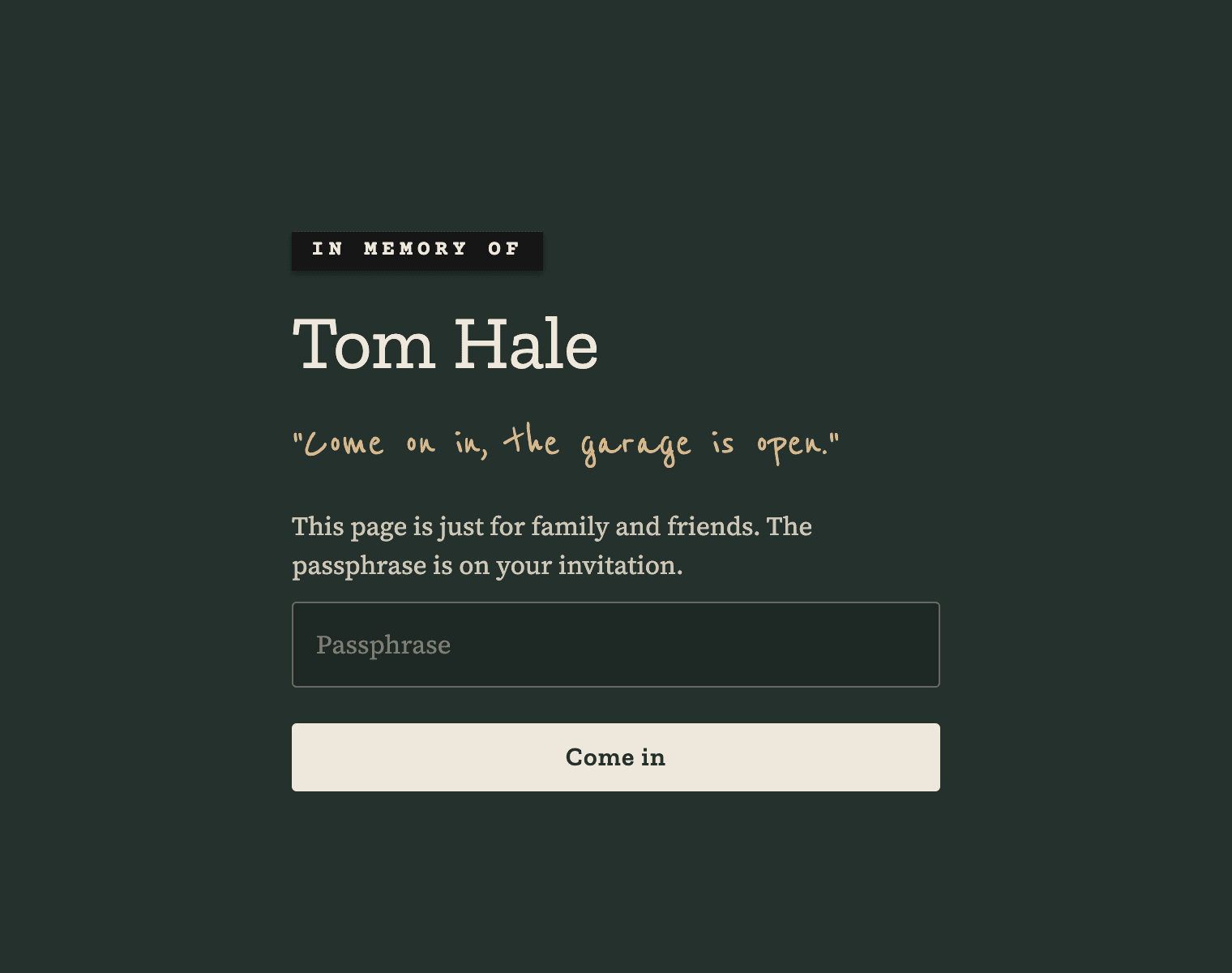
The passphrase screen for Tom's sample page, in the Shoebox template: “In memory of” on a label-maker tag, his name, a handwritten line, “Come on in, the garage is open,” and one field for the passphrase with a “Come in” button

Five designs, made to feel like keepsakes, not software

A memorial shouldn’t look like a form someone filled in. Each of Kept’s five templates starts from something a family might keep. Shoebox is a box of snapshots: prints taped to the page, label-maker tags, handwritten index cards, and orange date stamps. Vesper is a printed order of service, in ivory, navy, and Caslon, with hairline gold rules. Overcast is light and led by photos, Sweetpea is soft and rounded, and Meridian is an editorial grid with large, thin section numbers.

Each was designed in full, from the passphrase screen to the service details, then built to match, with three palettes and its own pairing of display, body, and handwritten type. Underneath, they share everything else: the fields, the photo wall, the memories, and the passphrase check. A template is only a look, so a page can change templates without retyping a word. For a Signature page, the studio designs one from scratch around the person, and it plugs into the same parts.

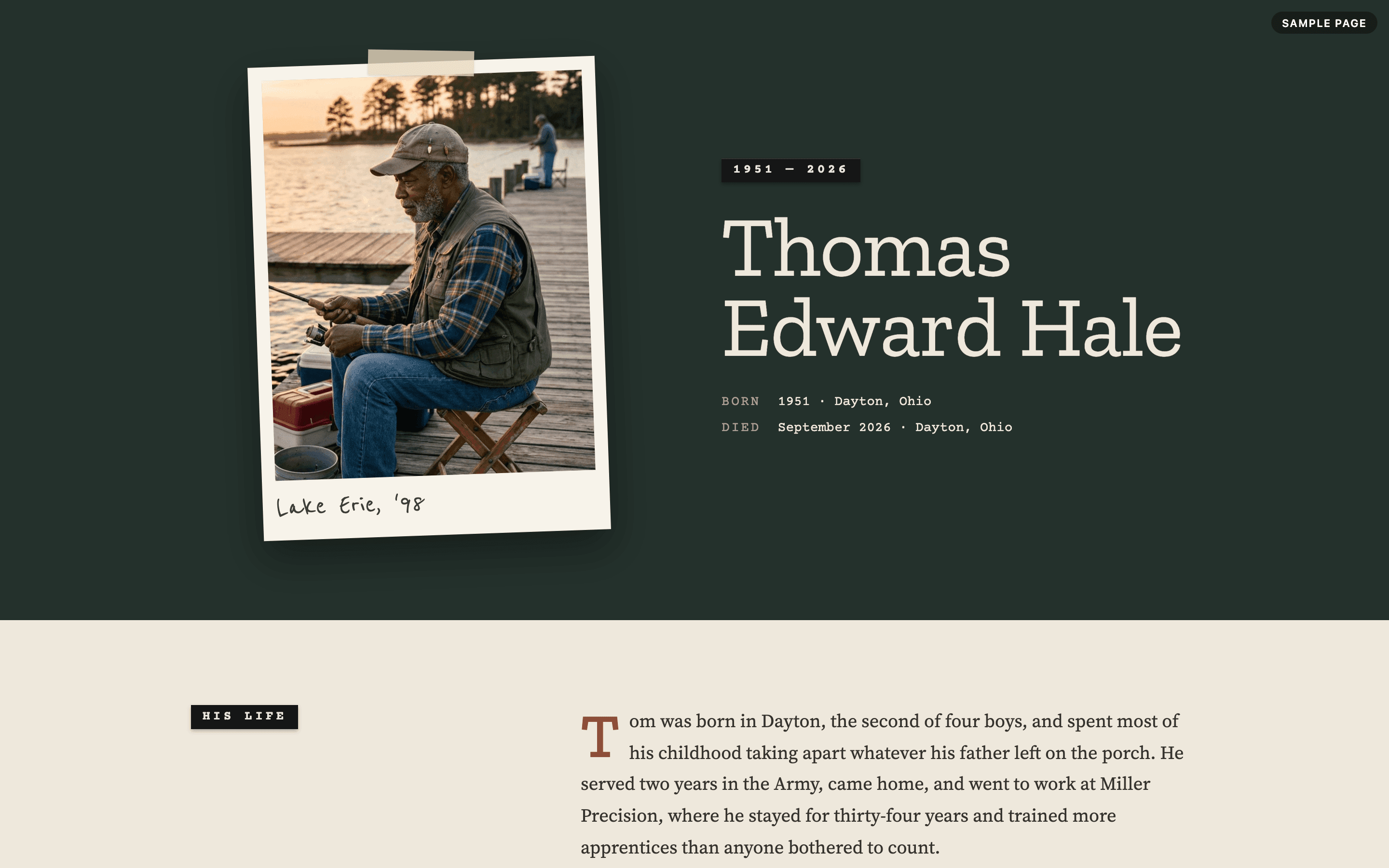
The top of Tom's sample page, in Shoebox: a snapshot of him fishing off a dock, taped down and captioned “Lake Erie, '98” by hand, beside his name in slab serif on a deep pine band
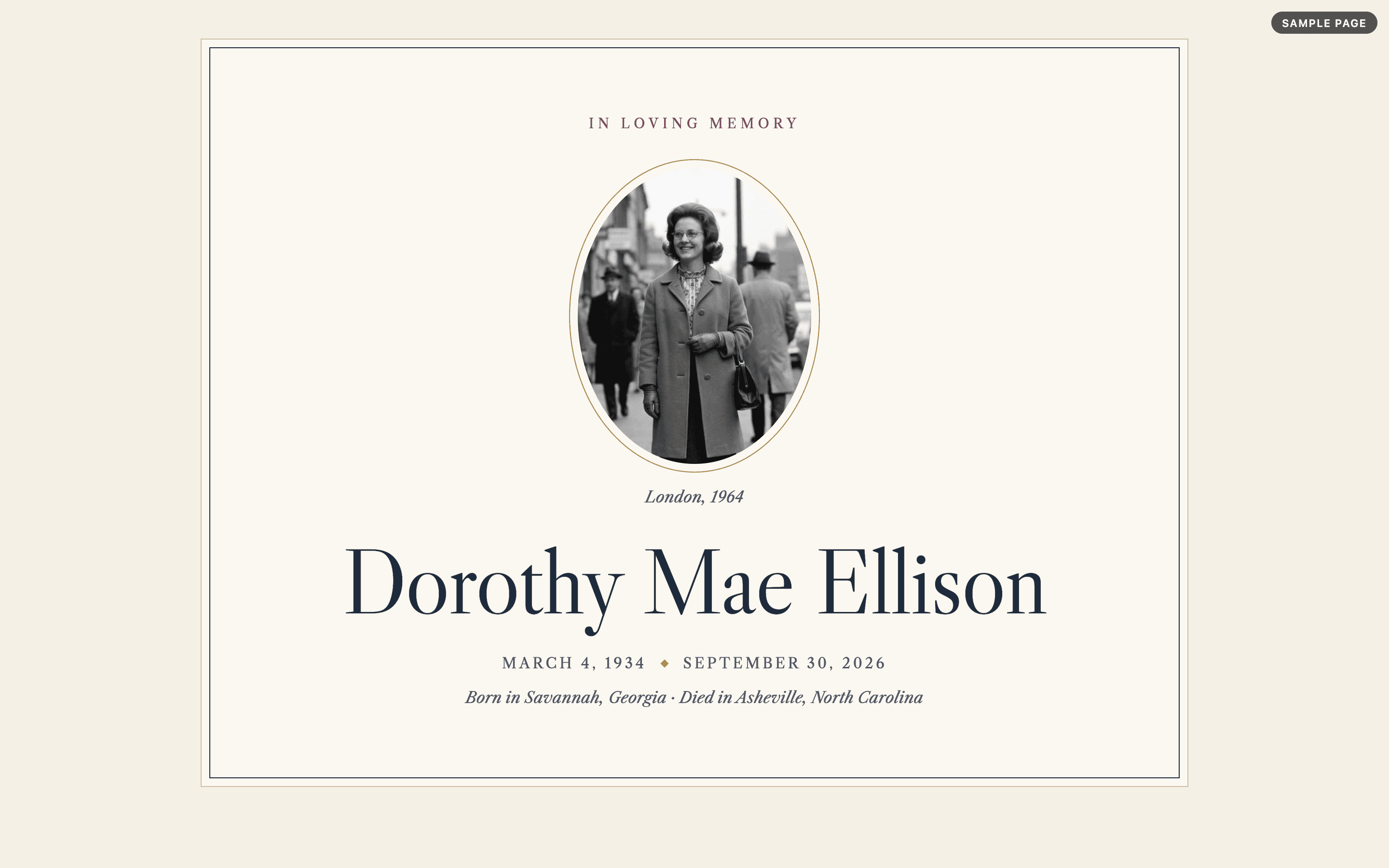
The top of Dorothy's sample page, in Vesper: “In loving memory” in letterspaced capitals, an oval photo of her from 1964 in a ruled ivory frame, and her name in Caslon above her dates

A memory wall that fills in while you’re reading

The heart of each page is what other people bring. Anyone with the passphrase can add a photo or a memory from their phone, with no account and nothing to install, and it appears for everyone on the page within moments. Photos are redrawn on the phone at two sizes, one for the wall and a larger one for viewing, which strips their location data before they leave. The server strips it again, so a photo never carries where someone was standing.

Live updates run over Supabase Realtime, but the connection carries no content. It only says that something changed, and the page asks the server again, through the same passphrase check as everything else. If Realtime can’t connect, the page quietly checks every twenty seconds instead. The family has a page of their own for taking anything down, and what they remove is hidden rather than deleted, so it can be put back.

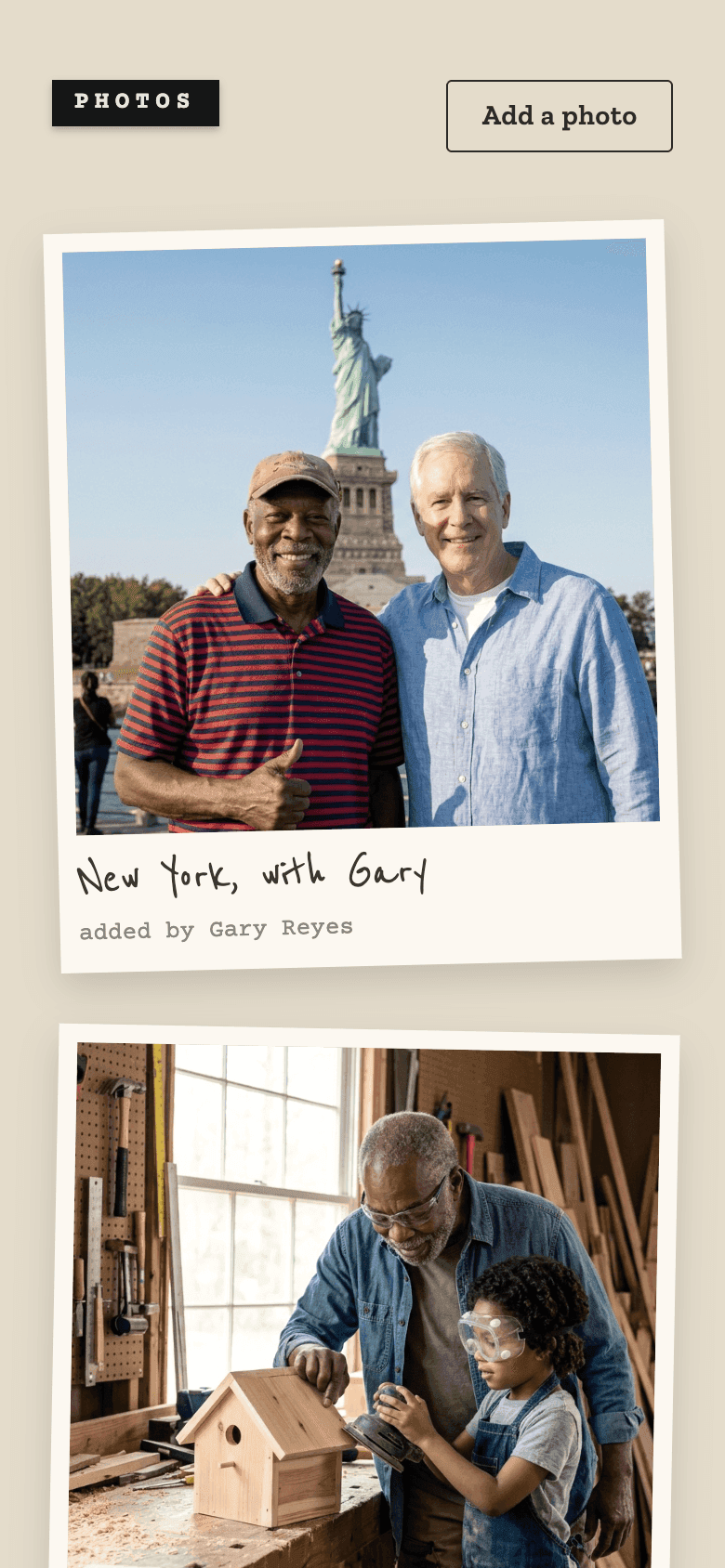
Tom's sample page on a phone: the Photos section, with an “Add a photo” button and snapshots friends added, each with a handwritten caption and the name of who added it
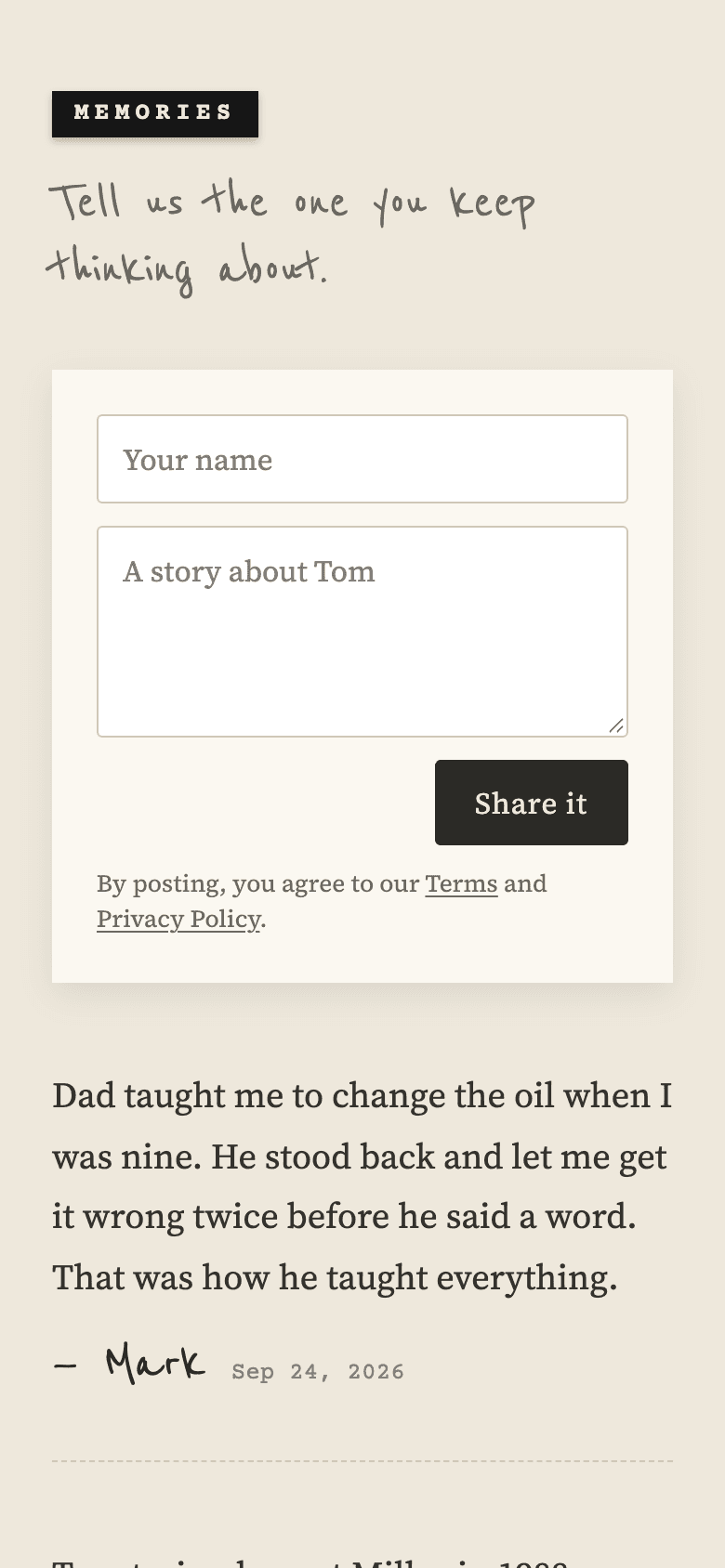
Further down on a phone: “Tell us the one you keep thinking about,” a form for a name and a story, and the first memory, from his son Mark

One site for families, another for funeral homes

Families come to Kept on their own, or through the funeral home that’s helping them, so it has two front doors. The home page speaks to a family at a hard time: what a page is, samples to open, four plain steps, a price paid once, and a note from the person who makes it. The page for funeral homes speaks to directors: how Kept fits inside the arrangement they already do, their name on every page and book, and what their home earns.

Both draw on one set of content, so a price or an answer changes in one place and is right everywhere: on both pages, in the structured data search engines read, and on the invoices. The brand is meant to sit quietly beside the memorials, in cream, mustard, and teal. The sample pages in the gallery are drawn the way real pages are, but keep visitors’ additions only in their own browsers.

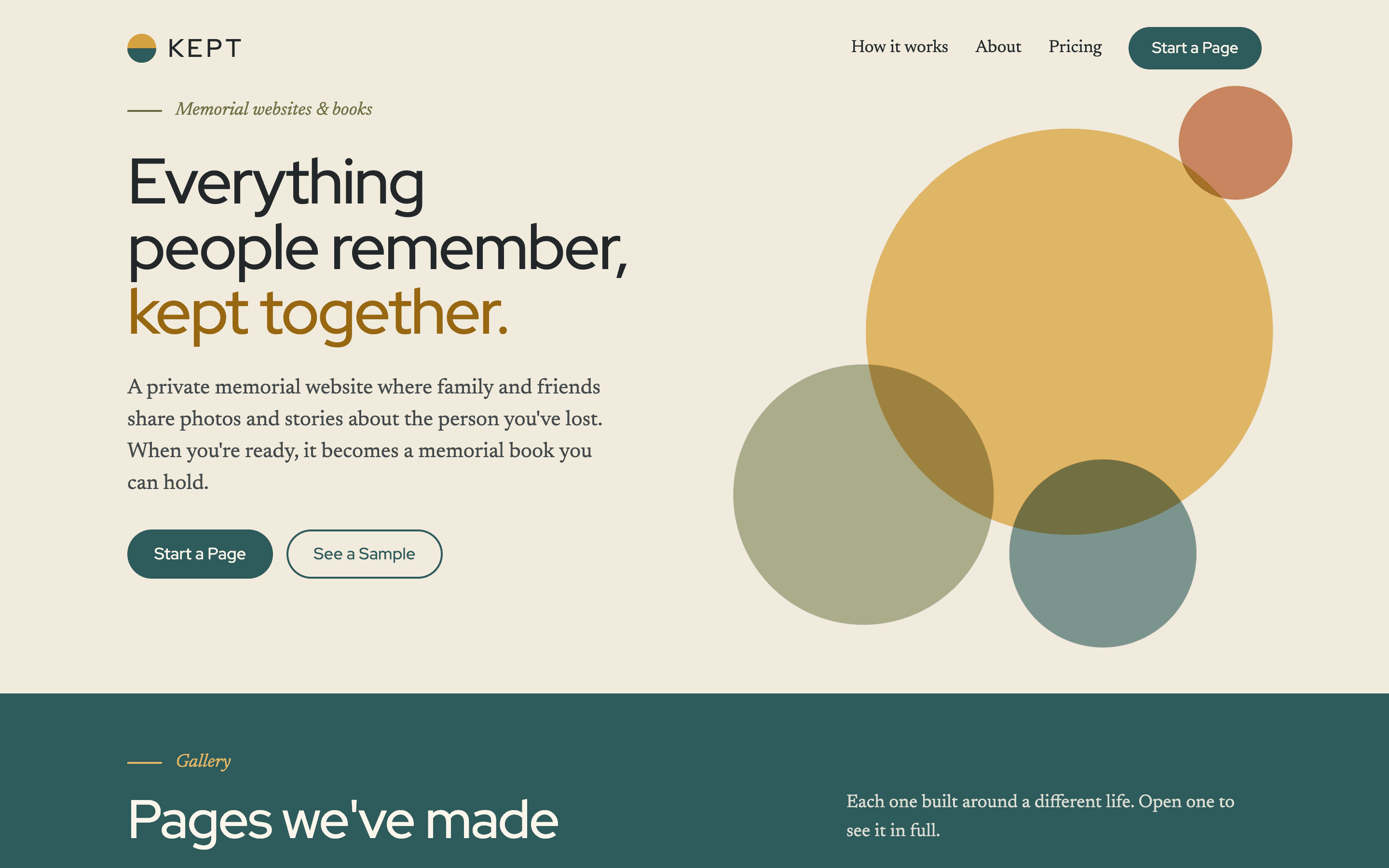
Kept's home page for families: “Everything people remember, kept together,” with Start a Page and See a Sample buttons beside overlapping mustard, rust, olive, and teal circles, and the gallery of sample pages below
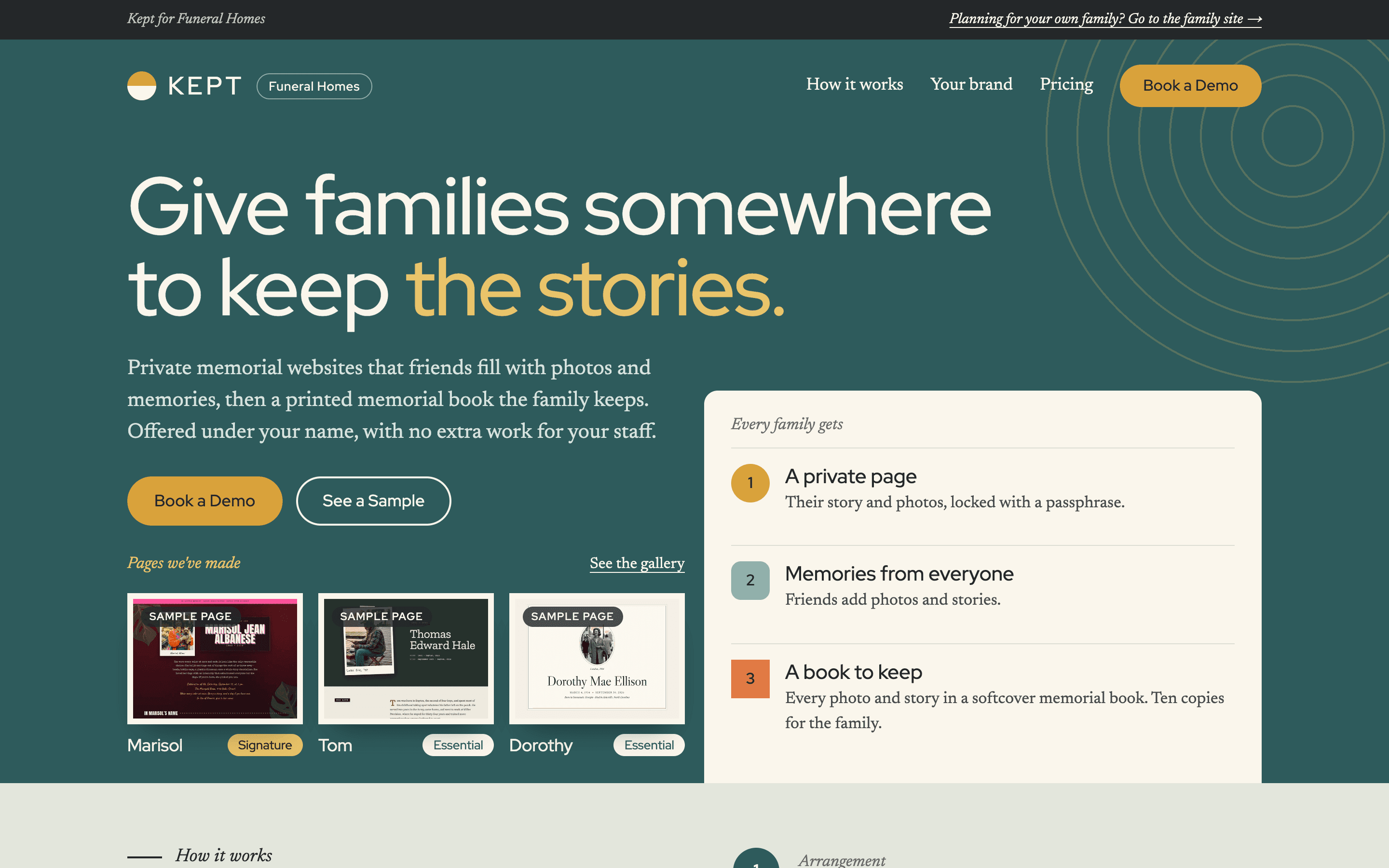
Kept's page for funeral homes, in teal: “Give families somewhere to keep the stories,” with Book a Demo, the three sample pages, and what every family gets

An order taken on a phone, at the arrangement

Funeral directors offer Kept while they sit with a family, so the order form is made for a phone held in one hand. Each home has its own link, and the link is the key: there’s no account to make, and if it’s ever shared too widely, a new one replaces it and the old one stops working. Only five things are required (the package, the person’s name, the first service date, a family contact, and their consent to be called), and the draft is saved on the phone as it’s typed.

Photos start sending the moment they’re chosen, before the form is submitted, straight from the phone to private storage, so a large photo never has to pass through a server. The family gets a link of their own for sending more, which shows nothing from the order but the person’s name. Each order reaches Loren by email with the print deadline in its subject, and the home has a page of its own showing where each family’s page and book stand, and what the home owes.

From a page to a book you can hold

When the family is ready, usually about six weeks after the service, once people have had time to share, everything on the page becomes a softcover memorial book. Essential and Signature include ten copies, and with Basic the book can be added later. Books ordered through a funeral home carry its name inside the cover.

The book shapes the rest of the system. Photos sent with an order are kept at full size for the printer, and prints mailed in are scanned and mailed back. It arrives weeks later, when the flowers are long gone, and it stays.

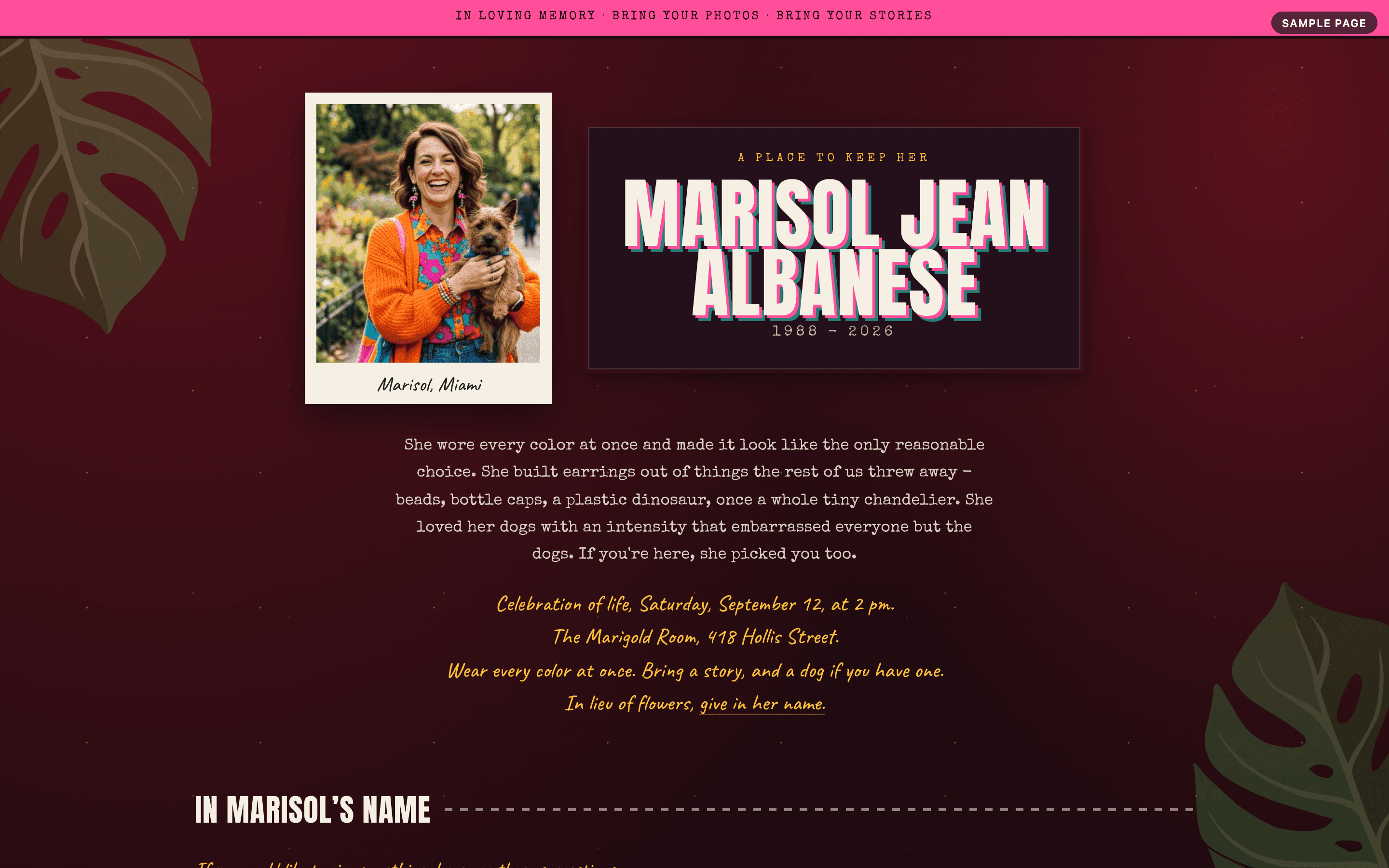
The top of Marisol's sample page, a Signature design: hot pink, marigold, and teal on deep burgundy, a snapshot of her laughing with her dog, and her name in bold poster type
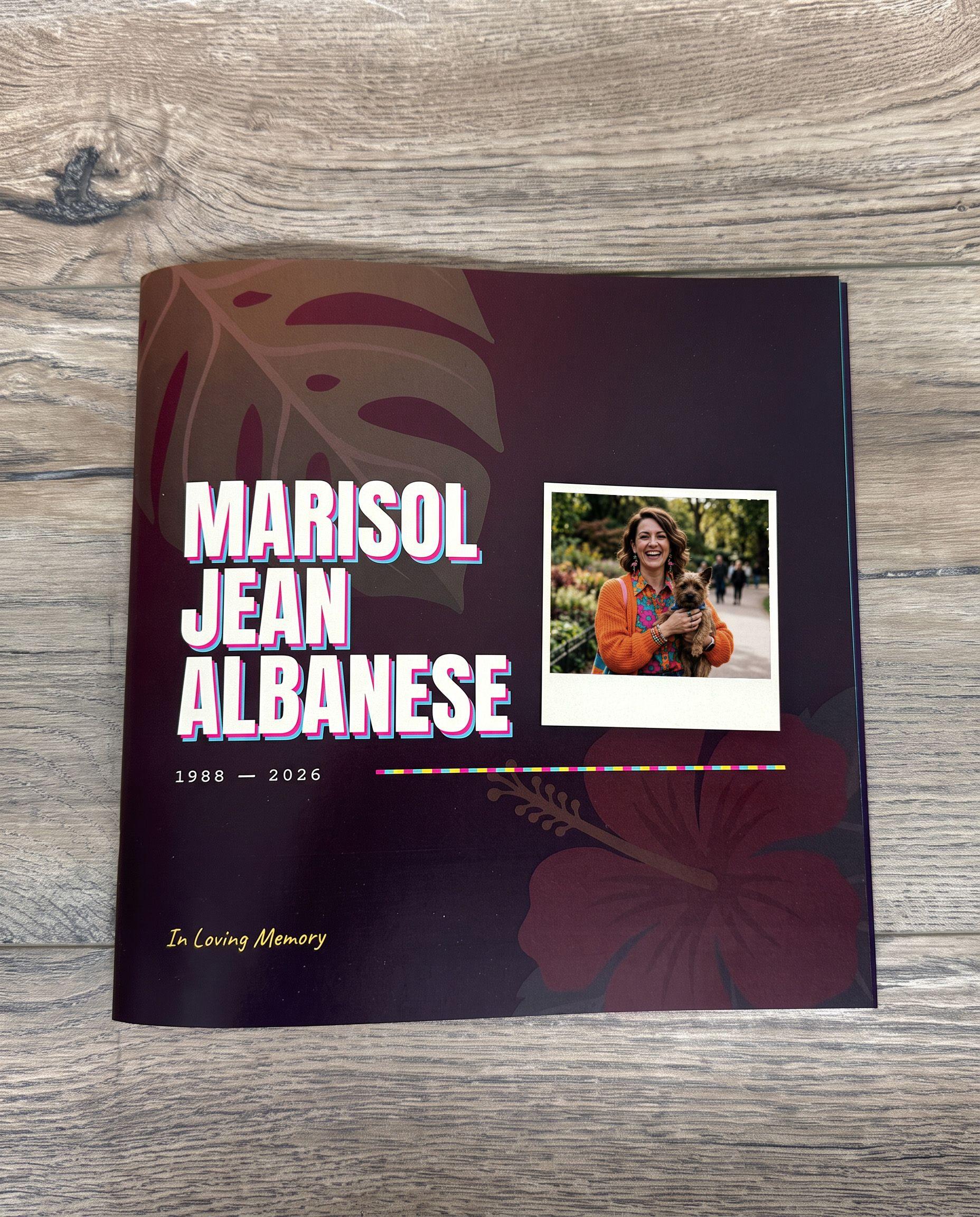
A memorial book for Marisol on a wooden table, its dark cover patterned with tropical leaves

Screenshots of keptinmemory.com and its sample memorial pages. The passphrase screen is from Shoebox’s design handoff, and the order form and photo page are mock-ups with sample details: the real ones belong to families, and stay private.

Under the Hood

One Next.js app with three faces, private by default everywhere a family’s words pass through.

keptinmemory.com

The sites for families and for funeral homes, the sample pages, and the guides. Prices and answers live in one file, and messages arrive by email through SendGrid.

  • Next.js
  • React
  • TypeScript
  • CSS Modules
  • SendGrid

The memorials

One route draws every memorial at its own address, in its template, palette, and type. Supabase holds the words, photos, and memories, and Realtime keeps each wall live.

  • Next.js
  • React
  • Supabase

Behind the scenes

The Kept admin makes a memorial and connects its address in Vercel and Cloudflare in one step, sends Stripe invoices, and lists funeral-home orders by the soonest print deadline.

  • Supabase
  • Stripe
  • Vercel
  • Cloudflare

Visit Kept

keptinmemory.com has the rest: sample pages to open, what a page costs, and how to start one for someone you love.

Have something of your own in mind? LateralTranslucence designs and builds it, from the first sketch to the day it goes live.